

Padel racket types are defined first by shape. The common shapes are round, teardrop, and diamond, and each shape changes how forgiving the racket feels at contact.
Round favors control. Teardrop adds easier power. Diamond rewards clean overhead technique.
Shape sets the sweet spot and balance feel. Those 2 details decide whether the racket helps your current game or makes every off-center hit feel worse.
Want a quick answer? Start with round if you’re new or still building reliable contact. Move to teardrop once your wall reads and overheads are consistent. Choose diamond when your timing is clean enough to hit the high sweet spot under pressure. This article explains shape, balance, core foam, and surface texture, the 4 variables that decide how a padel racket plays.
Your best racket depends on contact quality, swing speed, comfort, and the shots you use most. Players coming from tennis or pickleball should still account for padel’s compact swings, wall rebounds, and frequent overheads.
What shape does to a padel racket
Shape sets where the sweet spot sits. It also changes how the racket’s weight feels during the swing.
The FIP Rules of Padel cap racket length at 45.5 cm. The same rule caps width at 26 cm and thickness at 38 mm. Every racket shape works inside those limits, so the important difference is the geometry inside the frame.
That geometry affects contact. A round racket gives you the biggest margin around the center of the face. A diamond racket gives clean hitters more force at the top of the swing. Teardrop sits between those poles.
Round rackets: the safest first choice
A round racket puts its widest area near the center of the face. The sweet spot sits near your natural swing path, which helps when your timing is still changing point to point.
That margin matters during your first 30 sessions because wall timing and spacing are arriving at the same time. You can miss the center slightly and still send the ball where you intended.
Many round rackets are head-light. That means more of the mass sits near the handle, which makes the frame faster to move during reactions at the net.
If you’re sorting out the rest of the setup, the padel equipment breakdown covers shoes, balls, grips, and basic court gear.
Teardrop rackets: the transition shape
A teardrop racket shifts the sweet spot slightly upward. The frame gives easier depth and overhead pace from the same swing speed.
The margin tightens. Off-center hits lose direction faster than they do with a round frame.
This shape fits players who can use the glass, serve to a target, recover after the lob, and keep a basic bandeja in play. Many club-level intermediate players settle here because teardrop keeps enough control for defense and gives help when the point turns to attack.
Diamond rackets: power for clean contact
A diamond racket puts the sweet spot high in the face and carries more mass toward the head. The reward is simple: heavier contact on overheads.
Late contact drops power and direction. The player using a diamond racket needs clean preparation, early footwork, and consistent contact.
Advanced players use diamond frames to finish points with smashes and víboras. Beginners who copy a pro’s diamond racket usually spend the session chasing timing.
Padel racket shape comparison
| Shape | Sweet spot | Typical feel | Best fit |
| Round | Center of the face | Forgiving, quick to move | Newer players and control-first doubles players |
| Teardrop | Upper center | More pace with a tighter margin | Intermediate players building an attacking game |
| Diamond | High in the face | Powerful on clean overheads | Advanced players with reliable timing |
Balance changes how heavy the racket feels
Shape sets the expectation. Balance confirms the feel in your hand.
A head-light racket carries more mass near the handle. It swings faster and feels easier during long sessions.
An even-balance racket spreads mass through the frame. It gives a steadier feel for players moving from round to teardrop.
A head-heavy racket carries mass toward the top. It adds force to overheads and demands stronger timing during fast net exchanges.
For beginners, a head-light frame is the cleanest default. It helps you swing on time during long points and rapid exchanges.
Core foam changes the contact window
Core foam sits inside the perforated face. It affects dwell time, which is how long the ball feels like it stays on the racket at contact.
Soft EVA gives a cushioned feel and a slightly longer contact window. It is the best starting point for players who want control and arm comfort.
Cleveland Clinic describes tennis elbow as pain and tendon irritation around the outside of the elbow. MedlinePlus connects tennis elbow with repeated wrist and arm motions. For elbow-sensitive players, the buyer logic is simple: reduce harsh feedback early. A head-light round racket with soft EVA is the safest starting setup.
Firm EVA returns energy faster, so the ball exits the face with a shorter contact window. Advanced players choose it when they can already create clean contact and want the racket to add pace.
Start with a soft EVA. Move to firm EVA when your contact quality holds under faster rallies.
Surface texture changes spin
Padel rackets usually have a smooth face or a rough face. Texture changes how much friction the ball gets at contact.
A smooth surface gives the cleanest feedback for new players. The ball leaves the face predictably, which helps when your goal is direction control.
A rough surface gives deliberate spin more bite. It makes sense once topspin and slice are part of your real match game.
Sandpaper-style texture wears down with court time. After enough sessions, a rough racket can play closer to smooth, which matters if you bought the frame mainly for spin.
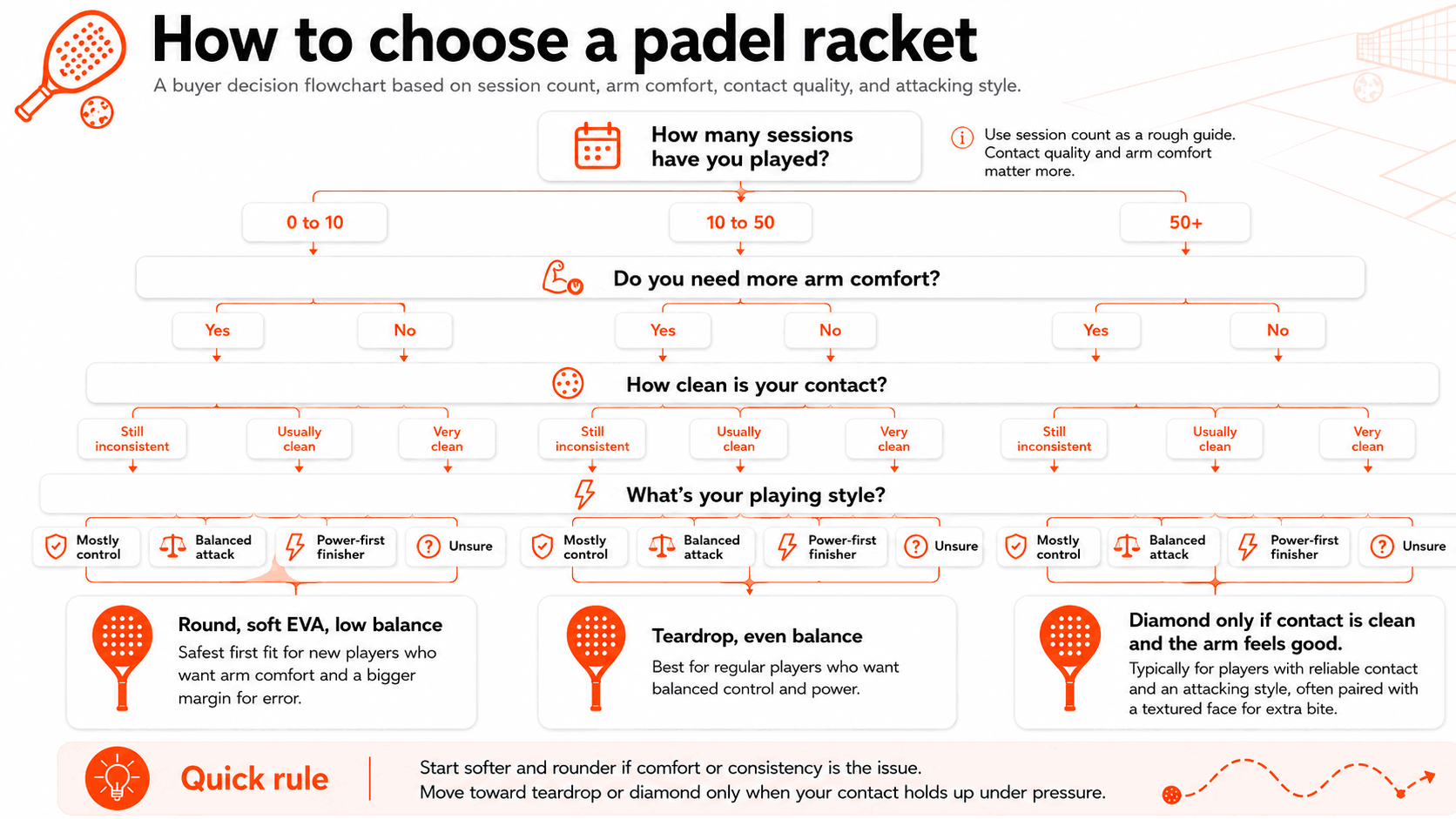
How to choose your first padel racket
Answer these 4 questions in order.
- How many sessions have you played? Under 30 sessions points to round. Roughly 30 to 100 sessions with clean contact points to teardrop. Advanced players with regular coaching feedback can test diamond.
- Any elbow or shoulder sensitivity? Start with a head-light round frame and soft EVA. That setup keeps the swing manageable while your arm adapts to the sport.
- Which problem costs you points right now? Mishits point to round. Short overheads from clean contact point to teardrop.
- Are you training in a level-based setting? A level-based clinic gives you cleaner feedback because the ball speed and match tempo are closer to your current game.
Skill-based padel clinics on Bounce can also give you a cleaner racket read because the ball speed and level are closer to your current game.
If you’re still building grip and wall spacing, beginner padel tips will help you get more from a forgiving frame before chasing extra power.
| Player profile | Shape | Balance | Foam | Surface |
| First 30 sessions | Round | Head-light | Soft EVA | Smooth |
| Intermediate with clean contact | Teardrop | Even | Soft or firm EVA | Smooth or rough |
| Advanced attacking player | Diamond | Head-heavy | Firm EVA | Rough |
Racket-sport background changes the timeline
Tennis players often arrive with good spacing and swing mechanics. The glass changes the job of the shot, so hard flat balls into the corner can come back as easy rebounds.
Pickleball players often adjust well to soft exchanges and compact volleys. The missing piece is the wall, which changes both timing and recovery.
Players comparing the feel of padel vs pickleball usually notice this fast: padel rewards patience with depth and glass awareness.
Racket-sport experience can move you toward teardrop earlier. Contact quality should still decide the purchase.
When to upgrade from round to teardrop
Try teardrop when you hit the sweet spot consistently and arrive in position for most routine balls. Another useful test: your overheads land deep enough to move opponents back.
At that point, a teardrop can add useful pace. Boredom is a weak reason to upgrade.
A coach can tell you whether the problem is racket fit or swing pattern. That matters before you spend money on a new frame.
Bounce lessons connect you with certified padel coaches by location, so you can get racket feedback from someone who has watched your timing, contact point, and court position.
Choose the racket your current game can control
The right padel racket type should match your contact quality now.
Round builds trust. Teardrop adds pace after your timing settles. Diamond rewards clean overhead contact.
The order matters.
For players building their game through structured coaching and organized play, Bounce connects you with certified coaches and competitive formats in your city.
FAQ
What are the different types of padel rackets?
Padel rackets come in 3 main shapes: round, teardrop, and diamond. Round gives the largest central sweet spot, teardrop shifts the sweet spot higher, and diamond puts the sweet spot near the top of the face. Shape is the first choice. Balance, foam, surface texture, and total weight shape the final feel.
What shape padel racket is best for beginners?
Round is the best padel racket shape for beginners. The sweet spot sits near the center of the face, which makes the racket more forgiving during late footwork and off-center contact. Many beginner-friendly round rackets also have head-light balance.
Which padel racket is the most forgiving?
A round racket with head-light balance, soft EVA foam, smooth surface, and moderate weight is the most forgiving setup. It gives the largest contact margin and the calmest feel for players still building timing.
Is it better to play with a light or heavy padel racket?
A lighter racket is usually better for a beginner because it is easier to move late in a match. Heavier frames can add stability and overhead force for advanced players with stronger timing. Choose the heaviest racket you can swing cleanly for a full session.
Should I get a rough or smooth padel racket?
Start with smooth if you are new. A smooth face gives cleaner feedback and easier direction control. Choose rough once you already apply topspin, slice, or overhead cut on purpose.
Can a beginner use a teardrop padel racket?
A beginner can use a teardrop racket. A round racket usually makes early learning cleaner because the sweet spot is larger and easier to find. Move to teardrop once your contact quality holds during real points.


