

You already own tennis shoes. Someone just invited you to play padel. Then someone at the club told you that you need padel shoes.
Fair question: is that real advice, or just another gear upsell?
For padel shoes vs tennis shoes, the differences are real. They matter most in 2 places: the outsole and stability structure. Everything else is secondary.
Quick answer: Padel shoes and tennis shoes are built differently in ways that matter on court. The key differences are the outsole traction pattern and where lateral stability is reinforced. For casual beginners, clay-court tennis shoes are a tolerable short-term substitute.
Hard-court tennis shoes on a padel court are a genuine problem: they slip on sandy artificial turf, wear unevenly, and increase injury risk during direction changes. If you plan to play padel regularly, padel-specific shoes are worth it.
For anyone still learning what is padel explains how the court, walls, scoring, and rallies work together. Footwear makes more sense once you understand how much padel movement depends on short steps, pivots, and controlled sliding.
Padel Shoes vs Tennis Shoes: Main Differences at a Glance
| Feature | Padel shoes | Tennis shoes | Why it matters |
| Court surface | Built for artificial turf and sand | Built for hard court, clay, or grass | Surface changes the grip you need |
| Outsole pattern | Usually herringbone or hybrid | Varies by tennis surface | Padel needs controlled grip and release |
| Stability | Stronger midfoot and lateral support | Often stronger heel and baseline support | Padel has more short pivots and rotations |
| Weight | Often lighter and more flexible | Can be heavier and stiffer | Lighter shoes help fast foot adjustment |
| Best use | Regular padel play | Tennis-specific court surfaces | Each shoe is made for a different movement pattern |
| Beginner option | Best choice for regular play | Clay-court tennis shoes can work short-term | Hard-court tennis shoes are the least suitable |
Why Padel Shoes and Tennis Shoes Look Similar
Padel and tennis are both racket sports, so their shoes share a few basic features. Both need:
- Side-to-side support
- Good grip
- Cushioning under the heel and forefoot
- Durable uppers
- Protection during quick stops and turns
That shared design is why tennis shoes can seem like a simple choice for padel. However, the court surface changes everything.
Tennis can be played on hard courts, clay, or grass. Each surface needs a specific outsole. Padel is usually played on synthetic turf with sand, so the shoe must grip without getting stuck. Mondo describes padel turf systems as surfaces that often combine synthetic fibers with sand infill, which helps explain why standard hard-court traction does not always translate well.
The shoe has to follow the court. That is the main reason padel shoes and tennis shoes are not fully interchangeable.
The Outsole Is the Biggest Difference
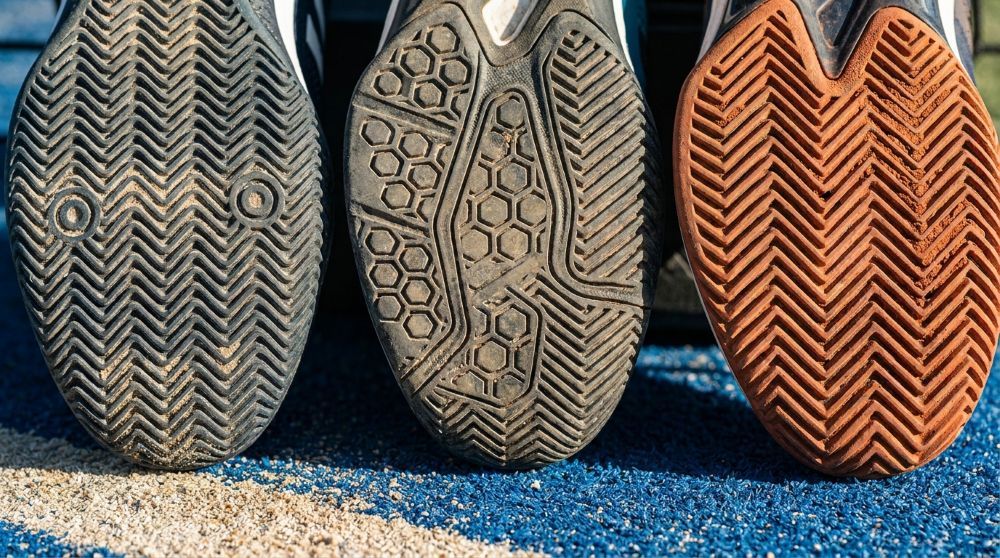
A padel shoe usually has a full herringbone or mixed herringbone pattern. This pattern helps the shoe grip the sand-filled turf while still allowing small controlled slides. That balance is important because padel players do not want to feel stuck to the court. They need to turn, rotate, and recover quickly.
Hard-court tennis shoes are different. They are made for rough, abrasive courts. Their soles are often harder and flatter because they need to survive concrete-like surfaces. On a padel court, that same outsole can feel slippery or unpredictable.
Clay-court tennis shoes are the closest tennis option to padel shoes. They often have a full herringbone sole, which gives better traction on loose surfaces. This makes them acceptable for a first padel session, but they are still not a perfect long-term replacement.
| Shoe type | Grip on padel court | Best use |
| Padel shoes | Best | Regular padel |
| Clay-court tennis shoes | Acceptable short-term | First few sessions |
| Hard-court tennis shoes | Poor to inconsistent | Not recommended for padel |
| Running shoes | Unsafe for quick lateral movement | Avoid for padel |
Why Hard-Court Tennis Shoes Are Not Ideal for Padel
Hard-court tennis shoes are built to handle rough court surfaces. That sounds useful, but it creates problems on padel turf.
The rubber is usually harder, so it may not bite into the turf and sand properly. During quick side steps, you may feel the shoe slide instead of grip. Then, when your weight shifts, it can catch late or feel unstable.
This is especially noticeable when you:
- Move backward for a lob
- Turn near the glass
- Push forward after a volley
- Stop suddenly after a smash
- Change direction during a fast rally
Those movements are common when learning how to play padel, which is why footwear needs to support quick reactions rather than long baseline running.
Clay-Court Tennis Shoes Can Work, But Only Temporarily
Clay-court tennis shoes are the best tennis substitute for padel because their herringbone outsole gives more grip on loose or sandy surfaces.
For a beginner, they are fine for a trial session. If you are playing padel once to see whether you enjoy it, clay-court tennis shoes are much better than hard-court shoes, running shoes, or casual sneakers.
Still, they are not exactly the same as padel shoes. Padel shoes are shaped around the sport’s tighter movements, frequent pivots, and court-specific grip needs. Clay-court tennis shoes are made for clay tennis, where slides are longer and movement patterns are different.
So, the simple rule is this:
Use clay-court tennis shoes for your first padel session if you already own them. Buy padel shoes if you plan to play regularly.
Stability Is Built Differently
Padel and tennis stress the foot in different ways.
Tennis includes longer side-to-side runs from the baseline. Players often stop hard, push off from the heel, and cover more open court. Tennis shoes are often built with strong heel support and firm torsional structure.
Padel is tighter. You move forward, step back, pivot, rotate, and react to the glass. Many movements happen in small spaces. Because of that, padel shoes often place more support around the midfoot, arch, and lateral side of the shoe.
That support helps when your foot turns quickly under your body. Without it, the shoe can feel vague or unstable during pivots. Over a full match, that can lead to tired feet, sore arches, or a less confident first step.
This is also why shoes belong in the same conversation as rackets, balls, and bags when choosing padel equipment for a more comfortable first few sessions.
Padel Shoes Are Often Lighter and More Flexible
Padel rewards quick adjustment. You may take several small steps before hitting one ball. A lighter shoe can make those short reactions feel easier.
Padel shoes are often slightly lighter than tennis shoes because they do not always need the same heavy outsole and toe-drag protection found in tennis shoes. They may also have a more flexible upper, especially around the forefoot and midfoot.
That flexibility matters when you rotate for volleys, turn after a wall rebound, or reset your position near the net.
Tennis shoes can feel more rigid. That extra structure is useful for tennis, but in padel it can sometimes feel bulky, especially for beginners who are still learning footwork.
Where stability is placed, and why it changes
Tennis and padel stress the foot in different ways.
Tennis has a lot of baseline movement. Players move side-to-side, stop hard, plant through the heel, and redirect from the back of the court. Tennis shoes are built around that pattern, so they often have stronger heel counters, more torsional structure, and heavier support through the rearfoot.
Padel movement is tighter. You move forward, retreat, pivot, rotate, and recover in short bursts. The glass changes everything because you are often turning in small spaces instead of running long distances.
That shifts the support need toward the midfoot and arch.
A good padel shoe needs stability through the midfoot and lateral sidewalls because a lot of the load comes during quick pivots, not long baseline slides. The wrong tennis shoe can feel secure in the heel but vague under the arch.
Over 90 minutes, that mismatch turns into fatigue. Over weeks, it can become tendon stress.
For players thinking through court clothing and shoe basics more generally, the guide on what to wear for court play has useful crossover advice on why running shoes and casual sneakers do not belong on a court.
Can Wearing the Wrong Shoes Increase Injury Risk?
The wrong shoes do not guarantee an injury, but they can increase the chance of slipping, twisting, or overloading the foot.
The main concerns are:
- Ankle sprains
- Slips during side steps
- Achilles strain
- Plantar fascia discomfort
- Blisters from poor fit or stiff uppers
- Knee stress from unstable foot placement
Court-sport injuries often happen during sudden cuts, landings, and direction changes. Research on shoe-surface friction and ankle sprain risk shows that traction characteristics can affect lateral ankle sprain mechanics.
In simple terms, your shoe and the court need to work together. Too little grip can cause slipping. Too much grip can make the foot stick when the body keeps moving. Padel shoes are designed to sit in the middle: enough grip to move safely, with enough release to turn smoothly.
Players who join organized sessions and coached clinics usually get court-specific footwear guidance early. That reduces the chance of building compensations around bad shoes. Bounce connects players with structured coaching, clubs, and local sessions in their city.
Can you use tennis shoes for padel?
Yes, but it depends on the type of tennis shoe.
Clay-court tennis shoes are okay for a first session or occasional play. Hard-court tennis shoes are not recommended because the outsole is not made for synthetic turf and sand. Grass-court tennis shoes are also not a practical padel option.
If you play padel more than once a month, buy padel shoes. If you are still deciding whether the sport fits you, clay-court tennis shoes are enough for a test run.
Most padel clubs provide shoe guidance for new players. If you are just getting started, Bounce lists clubs, courts, lessons, and sessions so you can ask before investing in gear.
If you play once, use the best court shoes you already have. If you play monthly or weekly, padel shoes are the smarter choice.
| Your situation | Best choice | Why |
| First time trying padel | Clay-court tennis shoes if available | Good enough grip for a trial |
| Playing padel once in a while | Padel shoes preferred | Better comfort and safer movement |
| Playing padel weekly | Padel shoes | Best grip, support, and durability |
| Only own hard-court tennis shoes | Rent or buy padel shoes if possible | Hard-court soles can slip |
| Play both tennis and padel often | Own both types | Each sport needs a different outsole |
Can You Use Padel Shoes for Tennis?
You can use padel shoes for a casual tennis session, but they are not the best long-term choice for tennis.
Padel shoes are usually made for turf and sand. On a hard tennis court, the softer outsole may wear down faster. The shoe may also lack some of the structure tennis players need for longer baseline rallies and harder stops.
If you play tennis regularly, use tennis shoes that match your court surface. If you play padel regularly, use padel shoes. That simple rule protects both your shoes and your movement.
The same idea appears when comparing padel vs tennis: the court, rules, and gameplay shape how players move, and shoes follow that same logic.
Beginner Buying Advice
Beginners do not need the most expensive padel shoes on the market. What matters most is getting the right type of shoe.
Choose a reliable entry-level or mid-range padel shoe with a proper outsole and good side support. Avoid running shoes, lifestyle sneakers, and hard-court tennis shoes for regular padel.
If you are still building confidence, footwear can make a big difference. Better grip helps you focus on the ball instead of worrying about slipping. Once your feet feel secure, it becomes easier to work on positioning, timing, and control—the same fundamentals behind most practical padel tips for faster improvement.
Conclusion
Padel shoes and tennis shoes come from the same court-sport family, but they are built for different surfaces.
The 2 differences that matter are outsole traction and stability placement. Padel needs controlled grip on synthetic turf and support through the midfoot. Tennis shoes, especially hard-court tennis shoes, are built for a different surface and a different movement pattern.
Clay-court tennis shoes are the exception. They are fine for a first padel session. They are not a long-term replacement for padel shoes.
For regular padel, buy padel-specific shoes. You will move better, slip less, and stop fighting the surface.
For players ready to take their padel game further, Bounce connects you with padel clubs, certified coaches, and organized sessions in your city.


