

Padel social solves the first problem new players hit: finding 4 people at the same time, at the same level, on an available court.
A padel social gives you the group first. The court time comes with rotation, short rounds, and a room full of players who also want names in their phone before they leave.
Want a quick answer? A padel social is a group padel session where players rotate partners and opponents across short rounds. You can usually show up alone, and the organizer handles pairings, court movement, and scoring.
Most sessions run 60 to 120 minutes and work best for players who want court time and new contacts. It is a low-pressure way into the local padel scene.
This guide covers the common social formats, what actually happens at your first session, how socials compare with open play and leagues, and how to find one near you.
What a padel social actually means
The phrase gets used loosely. In one club, padel social means a mix-in. In another, it means Americano or a one-night rotation with a small leaderboard.
The shared rule is simple: players attend without a fixed partner, and the session handles the matching.
A standard padel match is doubles, so a court needs 4 players. That is why social formats matter. They turn a player list into live games, then move people around fast enough that the room starts to feel like a group.
Players switching from pickleball notice it quickly when they compare padel vs pickleball: the walls and doubles-only format change the social math.
The main padel social formats
Most beginners run into 4 formats first. The names change by club, but the court behavior is easy to spot.
Mix-in
Mix-in is the easiest first version. Players arrive, the organizer builds the first round, and games run on a 10 to 15 minute timer. After each round, partners and opponents rotate.
Scores may be ignored or written down only to balance the next pairing. The goal is simple court time and introductions. In a 90-minute mix-in, you might play 5 or 6 rounds and partner with almost everyone.
Americano
Americano adds a personal score. You still play doubles, but partners rotate after each round. Every point you win goes to your individual total.
A common round is played to 16 or 24 points. At the end, the player with the highest total wins. The leaderboard gives the room a little edge without turning the session into a full tournament.
Mexicano
Mexicano uses results to set the next round. After each game, the current leaderboard shapes pairings and courts, so players near each other in level meet more often as the session moves.
This works well when the room has mixed levels. Stronger players drift toward stronger courts. Newer players get fewer lopsided games after the first couple of rounds.
Open play
Open play is drop-in court time. Some clubs use it as a social, but the rotation is looser and the leaderboard usually disappears. You show up, get on court, and move when a timer or court rule says to move.
It is good for casual reps. It can be weak for introductions because you may stay with the same 4-player group for most of the session.
Other padel social formats you might see
Four names show up often once clubs get more organized.
King of the Court
King of the Court rewards court movement. Winners move toward the top court, and losing pairs move down. Partners may stay together or rotate depending on the club.
It is easy to understand after 1 round. It also creates a small status game, which makes it better for players who already handle basic rallies.
Round robin
Round robin means every pair or player group gets scheduled against several opponents. In social padel, the organizer usually keeps matches short and uses the results for bragging rights or light seeding.
Round robin works when the group is predictable in size. It gets messy when people arrive late.
Open match
An open match is a listed game that needs extra players. You join a specific court at a specific time rather than a full-room rotation.
Use it when you want one match at a known level. It is also a useful step after you meet players at socials and start looking for sharper games.
Box league
Box league is a recurring format. Small groups get placed into boxes by level, play scheduled matches over several weeks, then move up or down based on results.
It belongs closer to league play than social play. Still, clubs sometimes use a relaxed box league to keep newer padel players connected after a first social night.
What to expect at your first padel social
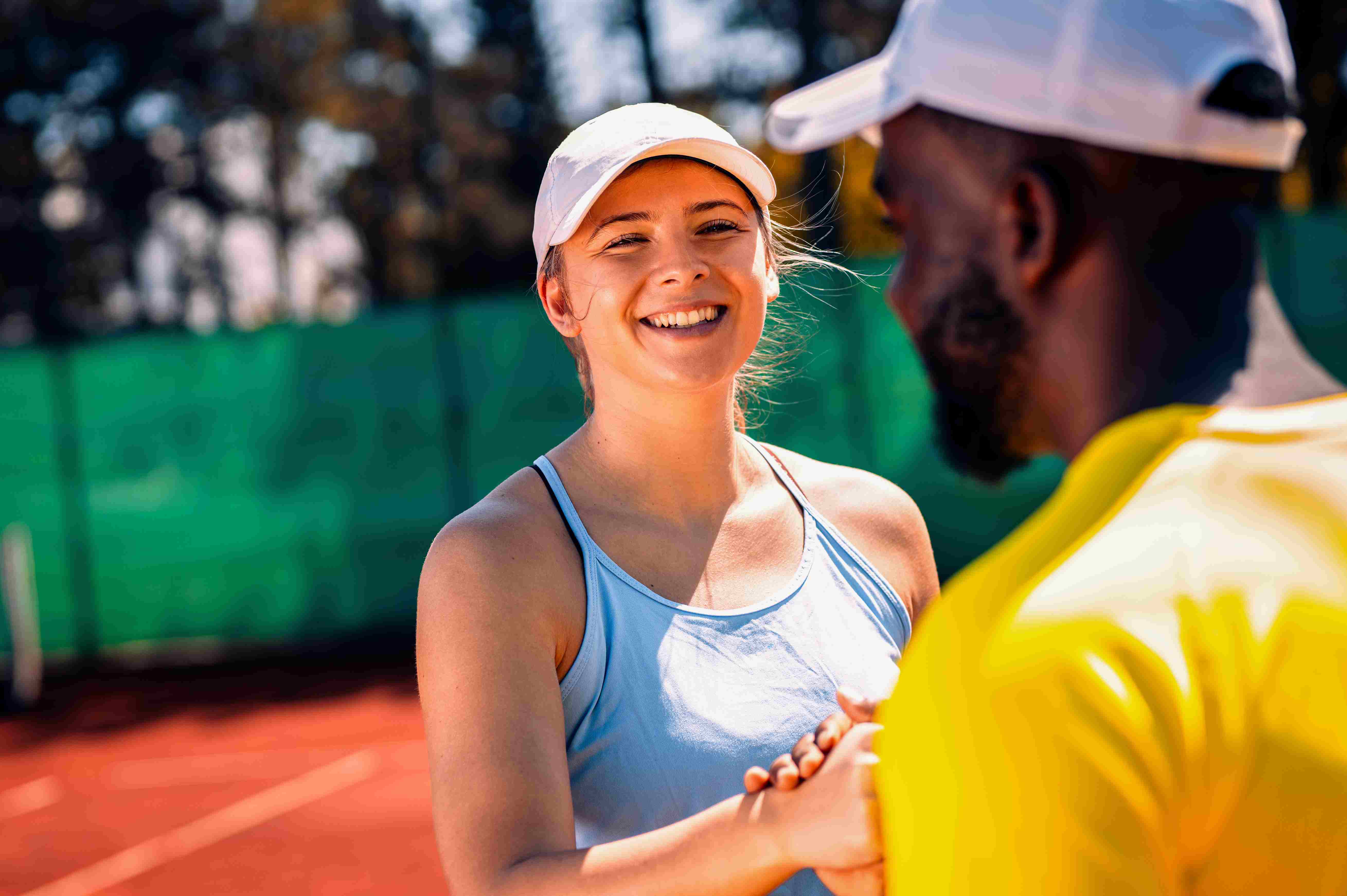
Showing up the first time feels more awkward in the parking lot than on court.
Arrive 10 to 15 minutes early. Find the organizer and say it is your first padel social. Give a plain level check: first time, under 10 sessions, beginner, intermediate, or tennis background with limited padel.
The organizer will put you somewhere sensible for round 1. Good organizers protect the room. They want beginners challenged without being buried, and experienced players pushed without babysitting every point.
The first round is the clunkiest. You are learning the partner, the glass, the pace, and the rotation at the same time. By round 2, the room usually settles.
Scoring depends on the format. In a mix-in, you may only call the score inside the game. In Americano, every point matters. Ask before round 1. Guessing mid-game is how beginners create 4-minute score audits nobody asked for.
Talk between rounds. Ask which side your partner prefers. Compliment a useful ball. Ask how long they have played. The best social players treat the court change as part of the session.
Bring a racket, shoes with lateral support, water, and a towel. Most people coming from tennis overestimate how much padel equipment they need for a first social. You can keep the setup lean.
Why padel works so well as social play
Padel's court does half the work. The official court is 10 meters wide by 20 meters long, according to the International Padel Federation's rules, and the glass walls keep points alive longer than most new players expect. Four players stand close enough to talk, call balls, and reset mistakes fast.
The doubles format matters even more. Every point forces small decisions between partners: who takes the middle, who covers the lob, who stays back after the glass, and who resets the rally. That communication builds familiarity quickly.
A 2023 systematic review in Systematic Reviews found sport participation in adults is linked with better social outcomes, including interpersonal communication and a sense of belonging.
That fits what happens in padel socials. The format gives players repeated, low-pressure chances to cooperate with people they just met.
The learning curve helps. A beginner can get rallies going in the first session because the serve is underhand, the court is smaller than tennis, and the walls bring some missed balls back into play.
Mixed-level groups survive because points last long enough for players to adjust.
How padel socials help you improve
Most players want 2 things from a social: more contacts and a real hit. Early on, the hit matters just as much.
A 90-minute social with 5 or 6 rounds exposes you to different serves, lobs, rebounds, and partner habits.
You learn how people communicate. You learn which balls create panic. You learn who controls the middle. You learn how your own game holds up when the partner changes every 12 minutes.
That variety builds game sense. Technical problems need a sharper feedback loop.
If your backhand block is late or your serve return position is wrong, 6 social rounds will repeat the error 6 times.
That is where coaching helps. A few padel tips are enough to give you a focus for the night, and a coach can turn vague mistakes into 1 or 2 things to work on next session.
Bounce lessons let players search for coaches by location and sport when social reps start revealing the same problem every week.
Padel social vs open play vs league
A padel social has planned rotation, while open play is drop-in court time with looser matching. A league is scheduled competition across several weeks, usually with fixed partners or fixed teams.
| Format | Partner rotation | Score tracking | Time commitment | Best fit |
| Padel social | Yes, by round or court | Optional to yes | Single session | Meeting players with structure |
| Open play | Loose or timer-based | Usually no | Single session | Extra reps with low setup |
| League | Usually fixed | Yes, carries over | Several weeks | Competitive rhythm and standings |
| Box league | Group-based over time | Yes, by box | Several weeks | Level-based matchups |
Open play is the loosest option. You can get reps with little setup, but the organizer may only be managing court flow.
The league is the sharper option. You commit to scheduled matches, standings, and a result that carries from week to week.
Padel social sits between them. You get enough structure to meet people and enough freedom to leave after one session.
For players who want a regular game before committing to a league, Bounce socials lists lower-stakes racket-sport sessions by city, and Bounce open play is useful when you only need court time.
What to do after your first padel social
Stay for 5 minutes after the last round. That is when the session turns into a network.
Ask the organizer whether there is a WhatsApp group, club chat, or next-session signup. Most regular groups live there, not in the booking confirmation.
Be specific when you ask someone to play again. "Want to hit next Tuesday?" works better than "we should play sometime." The first sentence creates a game. The second creates a polite nod near the shoe bench.
If you liked the format, book the next social before your motivation cools off. Repetition is what makes the group feel familiar. After 2 or 3 sessions, you will know who plays your side, who communicates well, who keeps the mood light, and who might be a good league partner.
How to find a padel social near you

Start with the exact search. Use "[city] padel social", "[city] padel Americano", "[city] padel open play", and "[city] padel round robin". Those searches catch clubs that label the same format in different ways.
Then check club calendars. New US padel markets are still thin, even though global participation has passed 35 million active players according to the FIP World Padel Report 2025. The best social may sit on a club events page rather than a big marketplace.
Bounce socials is worth checking because it groups racket-sport social sessions by city. In active Bounce markets like New York, Dallas, Houston, Austin, Miami, and Orlando, that can save you from checking every club calendar one at a time.
The USPA Where to Play directory can also help when you need a facility first. Find the club, then check whether it runs socials, Americano nights, open play, or round robins.
Ask one direct question before you book: "Is this beginner-friendly, or should I have match experience?" A good organizer will answer plainly. If the answer sounds vague, choose a mix-in before Americano.
Padel social is the easiest first step into regular play
Padel social works because it solves the boring part of the sport: finding 4 players who can all make the same time slot.
Show up once and the format gives you a sample of the room. By round 3, you know who communicates, who plays your preferred side, who keeps the mood light, and who you would want on court again.
For players building a regular game through structured coaching and organized play, Bounce connects you with socials, open play, leagues, and coaches in your city. Start with one session. The regular group usually comes from there.
FAQ
What is a padel social?
A padel social is a group padel session where players rotate partners and opponents across short rounds. The organizer handles pairings and court movement, so players can attend alone and still get several games.
Do I need a partner to attend a padel social?
You can attend most padel socials alone. Tell the organizer your level when you arrive, and they will place you into the rotation. Solo signups usually make the format easier because the organizer can balance courts.
What is the difference between a padel social and open play?
A padel social has planned rotation and may use light scoring. Open play is looser drop-in court time where players move by availability, timer, or club rule. Socials are better for meeting a full group. Open play is better when you just want reps.
What is Americano padel?
Americano is a rotating-partner doubles format. Each round gives you a new partner, and every point you win counts toward your individual total. The player with the highest total after all rounds wins.
Is padel social good for beginners?
Yes. Mix-ins are usually the best first option because rounds are short and the reset comes fast. Tell the organizer you are new before round 1, especially if you have played fewer than 10 times.
How do I find a padel social near me?
Search "[city] padel social", "[city] padel Americano", "[city] padel open play", and "[city] padel round robin". Check club calendars and event platforms, then ask whether the session is level-based before you book.


