

The pickleball kitchen, formally known as the non-volley zone, is one of the most distinctive and influential features of the sport. It shapes how points are constructed, how players move at the net, and how rallies remain balanced between power and control.
Kitchen rules exist to prevent players from dominating the game solely through aggressive net play, encouraging longer rallies, safer movement, and greater emphasis on placement and patience.
Misunderstanding kitchen rules is one of the most common sources of faults, disputes, and frustration among players at every level. Beginners often struggle with foot placement and momentum, while more experienced players sometimes misapply line rules or overreach during fast exchanges.
What Is the Pickleball Kitchen (Non-Volley Zone)?
The kitchen is the 7-foot non-volley zone on each side of the net. You can stand there freely and hit balls that bounce inside it. The one thing you can't do is volley while inside it or while touching the line.
The name comes from shuffleboard, which has a penalty zone called the kitchen. Pickleball borrowed mechanics from multiple sports when it was designed in 1965, and the term carried over.
This area is officially called the non-volley zone because players are not allowed to volley the ball while standing inside it or touching any part of its boundary lines.
The kitchen includes:
- The rectangular area directly in front of the net
- The non-volley zone line, which is considered part of the kitchen
- The area applies equally on both sides of the net
- The NVZ line marks only the boundary closest to the transition zone; the space directly above the kitchen carries no restriction.
The purpose of the kitchen is to limit constant smashing and net camping. Without this rule, taller or more aggressive players could dominate rallies by standing close to the net and volleying every ball downward.
By restricting volleys near the net, pickleball emphasizes controlled shots such as dinks, resets, and well-timed approaches.
Understanding the physical layout of the kitchen is the foundation for applying all related rules correctly. Many faults occur simply because players are unaware that the line itself is part of the non-volley zone.
Official Pickleball Kitchen Rules (Complete Breakdown)
The core rule is one sentence: no volleying while any part of your body, paddle, clothing, or equipment touches the non-volley zone or its lines. Every other kitchen rule extends from that.

The No-Volley Rule Explained
A legal volley requires both feet outside the kitchen, with no contact between your body, paddle, clothing, or equipment and the NVZ during the swing or follow-through.
Understanding what a volley is in pickleball determines when the kitchen restriction applies: any shot contacting the ball before it bounces.
A volley is defined as hitting the ball in the air before it bounces on the court. The core kitchen rule states that a player may not volley the ball while any part of their body, clothing, paddle, or equipment is touching the kitchen or the kitchen line.
This rule applies regardless of how small the contact is. Even a toe grazing the line during a volley results in a fault. The restriction applies only to volleys.
Groundstrokes are allowed from anywhere on the court, including inside the kitchen, as long as the ball has bounced first.
Key points of the no-volley rule:
- Volleys are prohibited inside the kitchen
- Volleys are prohibited while touching the kitchen line
- Groundstrokes are legal from inside the kitchen
- Momentum that carries you or any item on you into the NVZ after a volley is treated as part of the volley; the fault applies even if the next shot has already been struck.
Foot Faults and Body Positioning
Foot faults near the kitchen occur when a player volleys the ball while touching the kitchen or its line. However, foot contact is not the only concern. Any part of the body or equipment counts, including:
- Shoes
- Knees
- Clothing
- Paddle
- Jewelry or accessories
Wheelchair players follow a modified standard: front wheels may touch the NVZ line during a volley without incurring a fault. Rear wheel contact with the line during a volley is still a fault.
Body positioning becomes especially important during fast-paced net exchanges. Players often lean forward aggressively, increasing the risk of momentum-related faults. Proper balance and controlled movement reduce these risks significantly.
Kitchen Rules for Singles vs Doubles
Kitchen rules are identical in singles and doubles pickleball. The difference lies in how players move and cover the court.
In singles, players often approach the kitchen more cautiously due to greater court coverage responsibilities. In doubles, both partners typically establish position at the kitchen line, making awareness of line contact and partner positioning more critical.
In doubles play, a partner’s actions do not negate individual responsibility. Each player must independently comply with kitchen rules when volleying.
Pickleball Kitchen Line Rules: What Counts as “In” or “Out”
Is the Kitchen Line In or Out?
The non-volley zone line is considered part of the kitchen. This means:
- Stepping on the line during a volley is a fault
- Touching the line with any part of the body or equipment during a volley is illegal
- The line functions the same as the kitchen itself for rule enforcement
- A ball clipping the kitchen line during a groundstroke from outside the NVZ is in bounds; the fault applies only during volleys.
This rule differs from other pickleball line rules, where lines are generally considered in bounds. The kitchen line is a specific exception, treated as part of the restricted area. This extends to serves: a ball landing on the kitchen line during a serve is a fault, which pickleball serving rules address in detail.
Common Line Call Scenarios
Several common situations cause confusion:
- A player volleys the ball while their toe touches the kitchen line
- A paddle brushes the line during a volley
- Clothing or momentum causes brief line contact after contact with the ball
- Stabilizing after a volley by touching a paddle or hand to the NVZ surface, even though the ball has already crossed the net.
In all cases, if the contact is connected to the volley action, it is a fault. This includes contact that occurs immediately after striking the ball due to forward momentum.
How to Make Accurate Kitchen Line Calls
Pickleball is primarily self-officiated at the recreational level, which places responsibility on players to make honest and accurate calls. Best practices include:
- Calling faults on your own side clearly and promptly
- Communicating with partners in doubles
- Replaying points when uncertainty exists
Consistent rule understanding across all players reduces disagreements and improves overall game flow.
Momentum Rule: The Most Misunderstood Kitchen Violation
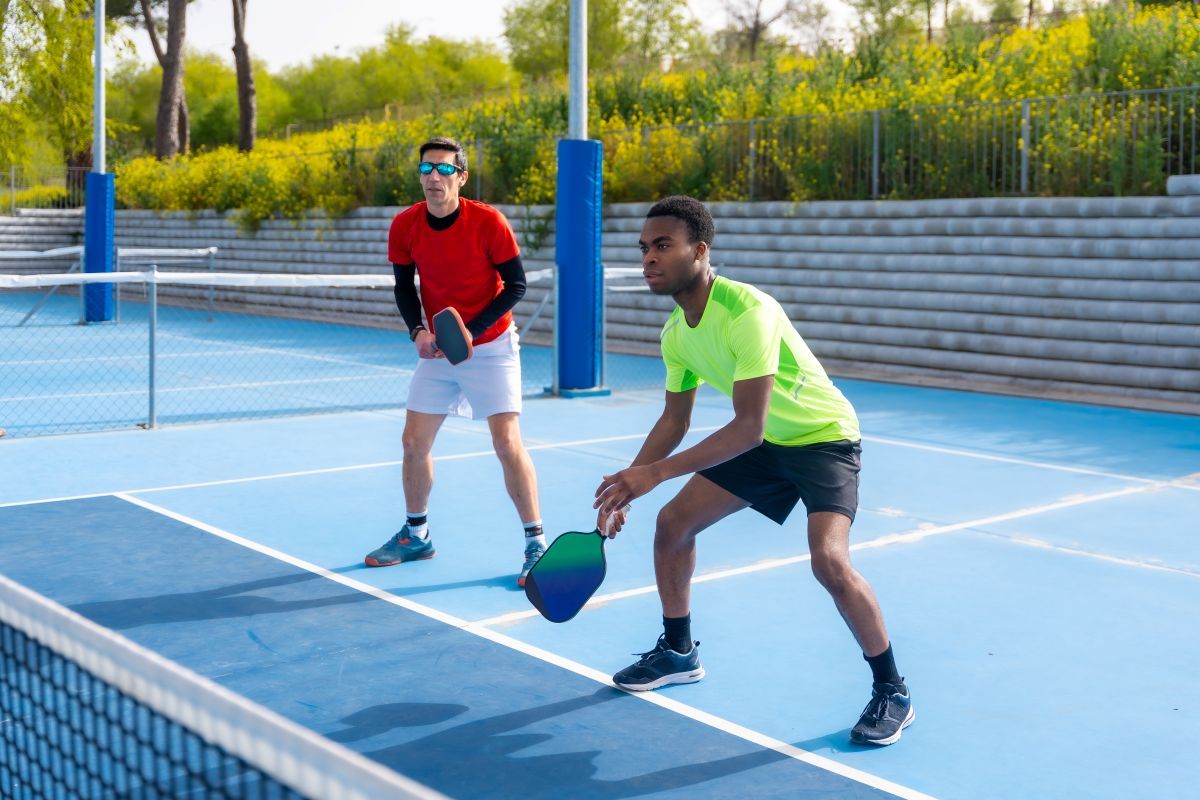
The momentum rule means a volley fault doesn't end when you contact the ball. If your forward movement carries you or anything on you into the kitchen after a volley, it's still a fault.
This rule exists because momentum is considered part of the volley action. Players cannot avoid the rule by contacting the ball outside the kitchen and then stepping forward uncontrollably.
Examples of momentum violations include:
- Volleying near the kitchen line and stepping into the kitchen immediately after
- Losing balance after a volley and falling into the kitchen
- Bracing with a hand or paddle inside the kitchen after a volley
- Jumping from outside the NVZ to volley, then landing inside it before regaining balance outside.
Maintaining balance and spacing from the line is essential. Skilled players often keep their toes just behind the kitchen line to allow safe volleys without risking forward momentum.
Can You Stand in the Kitchen? Legal Situations Explained
Yes. Standing in the kitchen is legal at any time. The restriction is narrow: you can't volley while in there. Hit a ball off the bounce and you can stay as long as you want.Players may legally:
- Stand in the kitchen while waiting for a ball to bounce
- Hit groundstrokes from inside the kitchen
- Enter and exit the kitchen freely between shots
- Remain in the kitchen while your doubles partner volleys legally from outside; neither player commits a fault.
The Erne is an advanced technique and is the one exception to this logic. Jump from outside the court (beyond the sideline extension of the NVZ), volley while airborne, then land outside the court boundary. Named after Erne Perry, who popularized it on tour, it's legal because you never contact the NVZ surface.
Dinking frequently involves stepping into the kitchen to play a soft shot after the ball bounces. This is fully legal and common at all levels.
Problems arise only when players forget to reestablish position or attempt a volley before fully exiting the kitchen.
Resetting foot position after groundstrokes is a fundamental skill. Players who rush back to the line without proper balance often commit momentum-related faults on the next shot.
Common Pickleball Kitchen Faults
Kitchen faults fall into two categories: contact faults (body, paddle, clothing, or equipment touching the NVZ during the volley) and momentum faults (forward movement carrying you in after the volley).
Several faults occur repeatedly across recreational and competitive play:
- Volleying while a foot is touching the kitchen line
- Volleying with any part of the body inside the kitchen
- Stepping into the kitchen due to momentum after a volley
- Paddle or clothing contacting the kitchen during a volley
- Attempting to volley immediately after stepping out of the kitchen without full control
Understanding these faults helps players self-correct quickly and avoid unnecessary point losses.
Most Common Mistakes Players Make in the Kitchen
Mistakes near the kitchen often stem from impatience or poor positioning rather than lack of effort. Common errors include:
- Overreaching for balls that should be allowed to bounce
- Standing too close to the line without margin for momentum
- Hesitating on legal dinks and lifting the ball too high
- Focusing on power instead of placement during net exchanges
These mistakes disrupt rhythm and increase fault rates. Controlled footwork and disciplined shot selection produce better outcomes than aggressive reaching.
Kitchen Strategy: How to Play Legally and Effectively at the Net
Effective kitchen play balances rule awareness with tactical decision-making. Strong net players:
- Maintain a stable stance just behind the kitchen line
- Prioritize dinks and resets over low-percentage volleys
- Keep paddles up while staying balanced
- Choose patience over forced winners
Legal positioning enables players to apply pressure without risking faults. As rallies extend, opponents are more likely to make errors, creating scoring opportunities without unnecessary risk.
Beginner Tips for Learning Kitchen Rules Faster
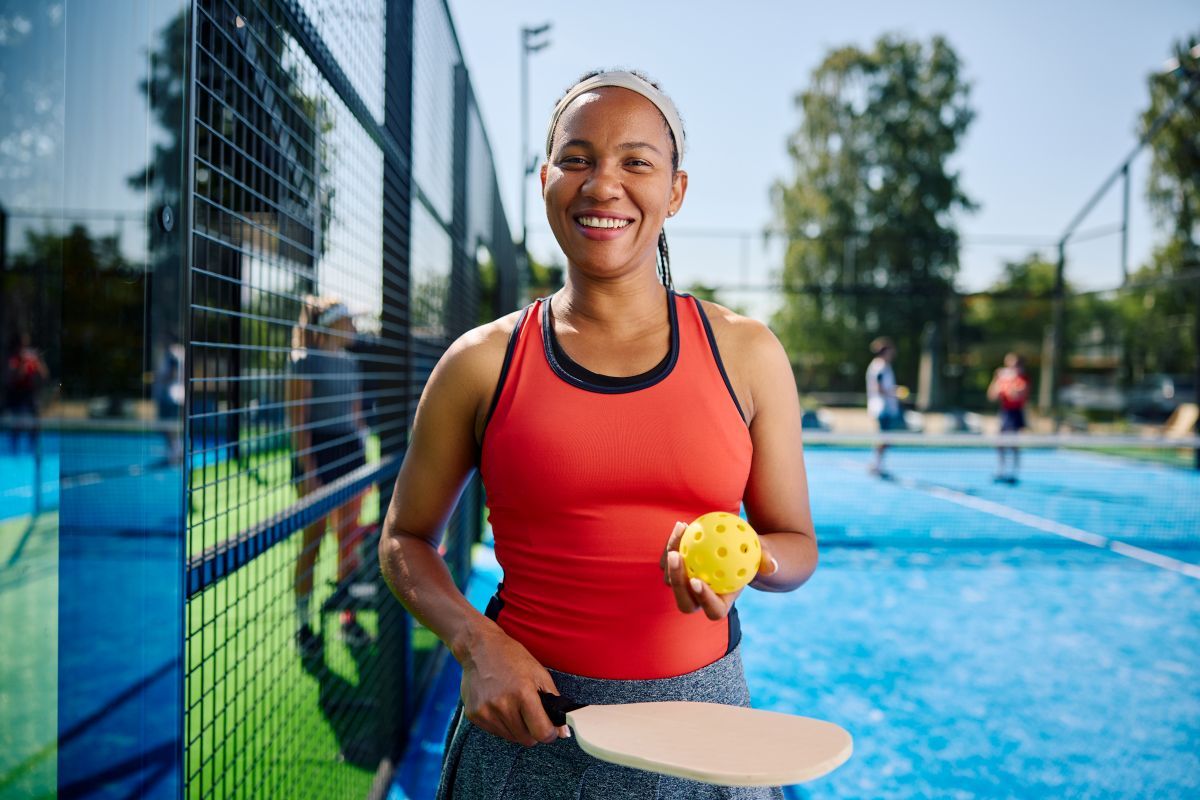
New players benefit from structured repetition and consistent rule application. Effective learning strategies include:
- Practicing slow dinking drills that emphasize foot placement
- Calling kitchen faults aloud during practice games
- Playing with experienced, rule-aware partners
- Receiving instruction from certified coaches
Structured learning environments accelerate improvement by reinforcing correct habits.
Platforms like Bounce support this process by connecting players with verified instructors, organized play sessions, and consistent rule-based formats that reduce confusion and promote proper kitchen technique.
How the Kitchen Shapes Long-Term Player Development
Mastering kitchen rules does more than prevent faults. It builds skills that carry across all levels of play:
- Improved balance and footwork
- Better shot selection under pressure
- Increased patience during rallies
- Stronger understanding of court positioning
Players who respect the kitchen develop a cleaner, more reliable game. As competition increases, these fundamentals become essential rather than optional.
Many players discover that focused kitchen training produces rapid improvements in match consistency.
Final Thoughts
The pickleball kitchen defines how net play works. Where you can stand and when a volley becomes legal are the two questions that matter most. Players who know the answers play with less hesitation at the net and fewer unforced faults under pressure.
Clear knowledge of kitchen rules reduces disputes, improves safety, and leads to more enjoyable games. Players who invest time in learning and applying these rules gain a competitive advantage rooted in consistency rather than power.
With disciplined practice, accurate rule application, and structured learning opportunities, the kitchen becomes a strength rather than a source of frustration.
For players looking to improve faster, learning kitchen rules in real game situations makes a measurable difference. Training with experienced coaches, joining organized play, and practicing in rule-consistent environments accelerates skill development and confidence at the net.
Bounce makes this process easier by helping players find certified instruction, structured sessions, and competitive play that reinforce correct kitchen technique. Building strong fundamentals today leads to cleaner, smarter pickleball tomorrow.
Frequently asked questions
What are the rules for the kitchen in pickleball?
The kitchen is the 7-foot non-volley zone on each side of the net. You can stand there freely and hit groundstrokes from inside it. The one restriction: no volleying while your body, clothing, paddle, or equipment is touching the NVZ or its boundary line. Momentum counts too; if forward movement carries you into the kitchen after a volley, it's a fault.
Can you step in the kitchen before it bounces?
Yes. You can enter the kitchen before the ball bounces as long as you don't volley while you're in there. The rule restricts volleying, not standing or moving. Walk in, watch it bounce, play the groundstroke.
Can you jump and land in the kitchen in pickleball?
If you're jumping to volley and land in the kitchen, it's a fault. The Erne avoids this by design: you jump from beyond the sideline, volley while airborne, then land outside the court boundary entirely. As long as you never contact the NVZ surface, the shot is legal.


